THEME: "THERE'S THE RUB" (52A: "Ah, that's where things get difficult" ... or what can be said about 20-, 35- and 40-Across?) — things associated with "rubs":
Theme answers:
MASSAGE TABLE (20A: Spot to work out knotted muscles)
SPARE RIBS (35A: Memphis barbecue staple)
MAGIC LAMP (40A: Key to Aladdin's success)
Word of the Day: The DOUGIE (46D: Dance craze of the 2010s) —
The Dougie (/ˈdʌɡi/ⓘDUG-ee) is a hip hop dance move generally performed by moving one's body from side to side and passing a hand through or near the hair on one's own head.
The dance move originated in Dallas, Texas, where it took its name from similar moves performed by 1980s rapper Doug E. Fresh. The Dougie gained notoriety through rapper Lil' Wil, whose song "My Dougie", released in late 2007, became a local hit. Then, a person called C-Smoove in Southern California taught the future members of Cali Swag District how to do the dance. Cali Swag District recorded the song "Teach Me How to Dougie" and filmed the music video in Inglewood, California during the summer of 2009. Subsequently, the video along with the dance became popular on YouTube. (wikipedia)
• • •
80% easy, 20% dead stop, thought I wasn't gonna be able to finish. Eventually, the Downs-Only gods are gonna kneecap, but not today, satans! It was close, though, partly because I'm an idiot but partly because the puzzle was playing a little dirty. A little DIRNDL-y, in fact. Actually, DIRNDL is a real word that I know, but trying to parse it today, lol, no way. I went through what I thought was every possible letter permutation that could make a word out of DIR--L and ... nothing. No dice. All the crosses seemed rock solid, but I just couldn't get a word to go there. Which meant I started doubting those rock-solid crosses. Which meant everything just kept falling apart even more. [SIGH]!!! I was literally SIGHing and thinking "that's got to be SIGH"! Indeed. But DIRNDL, man, DIRNDL. Oof. Abetting DIRNDL in its mission to kick my ass was The DOUGIE. Ask me for a 2010s dance craze in six letters, I've got NAE NAE, and then I've got nothing nothing. All I had for sure in that dance craze answer was the "U" from RUB, and that wasn't helping.
Eventually, the only reason I was able to break out of this prison of confusion was PRISON BREAK, which eventually I managed to see from just the "I" and the "R"! I had been assuming that 26D: Escape from jail was a verb phrase, not a noun phrase. [SIGH] and Aargh. But perhaps the biggest impediment to my Downs-only solve was a clue I'm still mad about: 27D: Clickables at the top of a computer screen (TABS). I had the "B" and ... nothing. Because TABS are not at the top of my computer screen, they're at the top of my computer browser. At the top of my screen is a menu, with headings like (in order) "Chrome," "File," "Edit," "View," "History" ... and the rest! Are menu headings called "TABS"? I just don't think they're the same thing. I assume the clue means browserTABS, but again, I refer you to the fact that those are absolutely not "at the top of [my] computer screen." So understanding that damned "B" in --B-, oof and aargh. "B"rutal. But PRISON BREAK really broke things loose, and I finished without cheating (i.e. without looking at an Across clue), so victory is mine and it is sweet.
So the theme: I liked it! Surprised it hasn't been done. It's cute to link these disparate theme answers together this way, and I really enjoyed seeing the revealer come into view and realizing what the theme was going to be. The fill could've been a little stronger—a simple four-theme answer probably shouldn't be relying so heavily on ECRU ACTI SUPE (all in one tiny section!) and then EKES ERE SGT SAO CITI ATAD ATSEA ACH RAH IMO OTOE OHS AWS ESS ETS etc. But CROSS-LEGGED is great (3D: One way to sit while meditating) and PRISON BREAK is good and COWHAND and REPLETE aren't bad, and as I say, the theme seems very nice, simple and funny and elegant, very Monday-appropriate. So I come down solidly on the Plus side.
Bullets:
29A: Internet meme feline (LOLCAT) — I feel like we should retire this one. It's too ... Aughts, somehow. Just feels not relevant anymore. Bygone. Stale. A ghost reference. Cats are still big on the internet, but somehow LOLCAT sounds very dated to my ears.
[LOLCATs in a more serious, squirrel-patrol mood]
5D: Cheap hooch (ROTGUT) — speaking of dated, everything about this one seems like it came out of Prohibition. ROTGUT sounds like 1920s slang, but it actually dates from 1632 (!). "Hooch" is a much more recent term, dating only from 1897. Did you know that "hooch" is "short for hoochinoo, a distilled liquor made by the Hoochinoo (Hutsnuwu) Indians, a Tlingit tribe" (merriam-webster.com)? Me neither!
36D: "___ Window" ("REAR") — the ESE of this puzzle had me so turned around that I actually started doubting My Favorite Movie. "R... ROAD WINDOW? ROSE WINDOW? ROY'S WINDOW? It's gotta be REAR!!" (true). [Note, I don't have a favorite movie, but I do have a Mount Rushmore of favorites, and REAR Window is on it—my cinema gateway drug, for sure]
56A: Singer Baker (ANITA) — Just as REAR Window is one of my favorite movies, ANITA Baker's Rapture is one of my favorite albums. Not what you'd expect a 16yo boy to be blaring from his '77 Toyota Sports Coupe in 1986, but that's what was happening, I promise you. I had no shame.
That's all for today. See you next time.
Signed, Rex Parker, King of CrossWorld
[Follow Rex Parker on BlueSky and Facebook and Letterboxd] ============================= ❤️ Support this blog ❤️:
THEME: "10-4" — a celebration (?) of TRUCKER DAY (!?!?) (110A: 10/4 celebration ... as suggested by this grid, which is made up entirely of 10- and 4-letter answers) — that's it: all answers are either 10 or 4 letters long
Theme answers:
all of them, I guess; also:
"UNDERSTOOD" (21A: "10-4")
DIFFERENCE (14D: Result of 10 - 4, e.g.)
SPUTNIK ONE (67D: Pioneering satellite launched 10/4/1957)
Word of the Day: Carlton FISK (93D: Hall-of-Fame catcher Carlton) —
At the time of his retirement, Fisk held the record for most home runs all-time by a catcher with 376 (since surpassed by Mike Piazza). He has held several age- or longevity-related records, including the record for most games played at the position of catcher with 2,226 (later surpassed by Iván Rodríguez, who also shared Fisk's nickname "Pudge"). Fisk still holds the AL record for most years served at the position (24). Fisk was voted to the All-Star team 11 times and won three Silver Slugger Awards which is awarded annually to the best offensive player at each position. In 2000, Fisk was elected to the Baseball Hall of Fame. (wikipedia)
• • •
I don't have much nice to say about this one, so I'll start by saying I appreciate that they ran this on the day itself (10/4) and I think the grid looks kinda cool. Unusual blocking, with every kind of symmetry imaginable (90º rotational, 180º rotational, plus horizontal and vertical and diagonal mirror symmetries). If you just look at it as a physical object and ignore the fact that it's a puzzle that one has to solve, then the puzzle is very nice indeed. But ... the ultra-restrictive terms of the grid (all 10s and 4s) really really cost you in places, and even if the grid didn't contain some real clunkers, it still just wouldn't be enough. There's almost no thematic content (beyond the revealer and the three answers listed above, one of which (DIFFERENCE) is a stretttttch), so you're left solving what feels like a really awkward themeless .... which is pretty much exactly what it is.
The "theme" is almost purely architectural. And ... what puzzle is improved by *limiting* itself to 4s?! Those are the answers you usually try to keep at a minimum because you simply can't do much interesting with them. But here it's just 4s as far as the eye can see. They aren't particularly bad fours, they're just ... fours. There's only so much potential upside to 4s. So as far as any interest goes, all you've got are 10s. Some of those are fine, but almost none of them are real marquee-worthy winners, and one of them is the most laughable long answer I've seen ... ever? Maybe. That answer: OLDER PIPES? (8D: Drawback to a brownstone). I'm cackling. I might, maybe, almost, if I was feeling charitable, give you OLD PIPES. OLDER is killing me. It's not that you would never say that, it's just ... older than what? I had OLDER PAINT in there for a bit, back when I had the "12 Days of Christmas" bird as a SWAN (which is what it should've been—there are no DOVEs in that song, only (famously) turtleDOVEs!). "Oh, Danny Boy, the OLDER PIPES are calling from GLUT to BEEN..."
And why do we have this "theme?" For some made-up "day"? I feel bad for truckers because of the high cost of diesel, I really do, so no offense to truckers, but this is not a day, and if it is a day, one on which truckers deserve to be celebrated, well ... they deserve better than this. And then the puzzle can't even figure out how to let you, the solver, figure out the "10-4" gimmick; instead, the puzzle just explains it to you in the revealer clue. That is not how you do a revealer! I'm supposed to figure something out. By solving. That's the contract, that's how it works. It's like explaining why a joke is funny. If you have to explain, you failed somewhere along the line. Maybe if the 10s had absolutely shimmered today I would've had warmer feelings for this thing. But it's hard to have warm feelings for EMAIL ALERT or ABOARD SHIP or END OF AN ERA (58A: Epoch conclusion?) (an "epoch" is not an "era"—this is why Taylor Swift didn't have an "Epochs Tour") or PASTA SALAD or SPRINT CARS or SUIT TO A TEE or SOLO ARTIST or ROAD MARKER or especially ADAPT OR DIE, a loathsome slogan (74D: Maxim about surviving in a rapidly changing world). Also loathsome—the whole TRAD wife thing (most of those "influencer" accounts are fake, and anyway, it turns out anti-feminist men actually hate TRAD wives as much as they hate all women, so what is the point?). You could avoid TRAD altogether. Just put LANE over APEX instead of LAVA over APED, and poof, goodbye TRAD wife (76D: Prefix with "wife" for some influencers).
Bullets:
29A: "___ the One" (song on Springsteen's "Born to Run") — two days in a row that we get a fill-in-the-blank song title clue from a non-famous B-side (yesterday, Abba's "OUR Last Summer," the B-side to "Thank You for the Music"; today "SHE'S the One," the B-side to "Tenth Avenue Freeze-Out"). There are genuinely famous musical possibilities for "SHE'S": Hall & Oates's "SHE'S Gone"; Patsy Cline's "SHE'S Got You"; Cyndi Lauper's debut album, SHE'S So Unusual; Cole Porter's "Miss Otis Regrets (SHE'S Unable to Lunch Today)"; etc.
71A: Classic brand with the slogan "When it rains it pours" (MORTON SALT) — I really—and I mean really—thought "Morton" was a possessive (i.e. "MORTON'S"). Maybe I'm getting Morton confused with Gorton's—both their mascots are wearing rain gear!!!
79A: Electronic musician Steve (AOKI) — forgot about him. He's the AOKI who replaced ISAO AOKI ... Benihana's founder is Rocky AOKI, I just found out. Those are your three crossword AOKIs, and that's it, as far as I know. (The first Japanese ambassador to the U.S. was an AOKI, but that clue hasn't been used since the '50s).
90D: Femme fatale-filled genre (NOIR) — this made me laugh. Specifically, the "filled" part. "NOIR: Now With 50% More Femmes Fatales!" There's usually just the one in any given NOIR, if that.
93A: Defense in a snowball fight (FORT) — I had MOAT, lol. "Good luck hitting me with a snowball now, suck-" [gets hit directly in face]
38D: Victor Hugo's religious epic poem (DIEU) — super-obscure. I've never even heard of it. Why would anyone have heard of this?:
Dieu (French pronunciation:[djø], "God", 1891) is a long religious epic by Victor Hugo, parts of which were written between 1855 and 1862. It was left unfinished, and published after his death.
When it was rejected by his publisher in 1857, Hugo tried to integrate it into Petites Epopées (later La Légende des siècles), eventually announcing that it would form a companion work, along with La Fin de Satan. He had stopped work entirely by 1862, and while the result is fairly coherent, it is less complete than either of the other works, lacking even opening lines. (my emph.) (wikipedia)
117A: Nails will do it, but not teeth (RUST) — this is a dirty lie. Just ask a saw.
That's all for today. See you next time.
Signed, Rex Parker, King of CrossWorld
[Follow Rex Parker on BlueSky and Facebook and Letterboxd] ============================= ❤️ Support this blog ❤️:
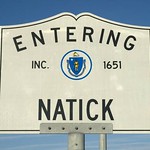
A long time ago, I was solving this puzzle and got stuck at an unguessable (to me) crossing: N. C. WYETH crossing NATICK at the "N"—I knew WYETH but forgot his initials, and NATICK ... is a suburb of Boston that I had no hope of knowing. It was clued as someplace the Boston Marathon runs through (???). Anyway, NATICK— the more obscure name in that crossing—became shorthand for an unguessable cross, esp. where the cross involves two proper nouns, neither of which is exceedingly well known. NATICK took hold as crossword slang, and the term can now be both noun ("I had a NATICK in the SW corner...") or verb ("I got NATICKED by 50A / 34D!")
.png)